What the Season Takes With It: The Philosophy of a Menu That Never Stands Still
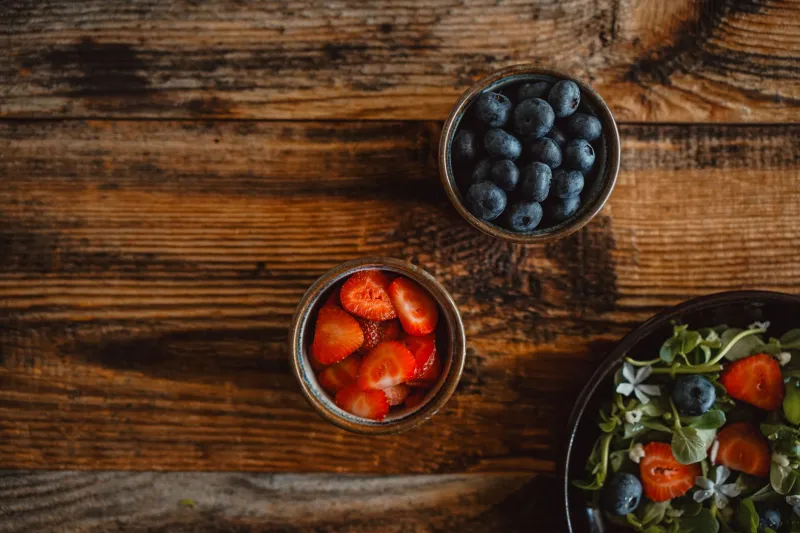
There is a particular kind of loss that arrives not with drama but with a change in the light. You return to a table you have kept for years, open a menu you could nearly recite from memory, and find that the dish you came for — the one that has anchored your autumn for as long as you care to remember — is simply gone. In its place sits something new, something that smells of a different earth and carries a different promise. The waiter does not apologize. The kitchen does not mourn aloud. And yet something in you registers the absence as acutely as any departure.
This is the quiet curriculum of the seasonal menu. It teaches, with remarkable consistency, that nothing at the table is permanent — and that this impermanence is precisely the point.
The Chef's Calendar Is Not the Diner's Calendar
For the kitchen, the decision to rotate a menu is rarely sentimental. It is, at its core, an act of honesty. Ingredients grown in season carry a quality that no amount of sourcing ingenuity can replicate out of their natural window. A tomato in August and a tomato in February are, in the estimation of any serious chef, two entirely different objects. One belongs on the plate. The other belongs in a different conversation altogether.
But the chef's relationship with time moves faster than the diner's. Where a kitchen team might feel the shift from summer into fall as a welcome creative reset — a chance to work with squash, with root vegetables, with the deep umami of dried mushrooms and braised meats — a regular diner may experience the same transition as a small rupture. The dish they planned their week around has been retired. The flavor they were carrying forward in memory has been interrupted.
This asymmetry is not a flaw in the seasonal model. It is, arguably, its most instructive feature.
Tiny Deaths, Quiet Rebirths
Regular diners at restaurants that rotate their menus seasonally often describe the experience in terms that border on the elegiac. A dish disappears and, with it, a version of themselves — the self that ordered it on a first date, that requested it during a difficult winter, that shared it with someone who is no longer present at the table. Food is among the most powerful carriers of autobiographical memory available to us, and so when a dish departs, it takes with it a small archive.
And yet the return of a seasonal favorite — the reappearance of a spring pea soup, or a stone fruit dessert that only arrives in the brief window when the harvest allows — produces a sensation that few other pleasures can match. It is reunion. It is the particular joy of something that was lost being given back, not because you asked, but because the earth turned and brought it around again.
This cyclical rhythm — loss and return, departure and arrival — is not unlike the rhythm of a life well-examined. Seasons do not ask permission. They impose their logic on everything they touch. A menu that submits to that logic becomes, over years, a kind of temporal autobiography for the diners who follow it.
The Decision Behind the Edit
The act of retiring a dish is never as simple as it appears from the dining room. There is negotiation involved — with suppliers, with the kitchen team's capacity, with the institution of a menu that has built loyalty over time. Some dishes become so identified with a restaurant's identity that removing them feels like an act of self-erasure. Others have simply run their course, their ingredients past peak, their preparation no longer reflecting what the kitchen is capable of or curious about.
What distinguishes a thoughtful seasonal edit from a careless one is the degree of intentionality behind it. The best kitchens treat the transition not as a subtraction but as a transformation — a way of honoring what was by making room for what is becoming. A braised short rib that defined a winter menu might inform the technique behind a spring lamb preparation. The flavors do not disappear; they evolve, translated into a new context, carrying forward something essential even as the specific expression changes.
For the attentive diner, this continuity beneath the surface change is part of what builds trust in a restaurant over time. You may not always get what you came for, but you come to understand that what you receive has been considered with equal care.
Learning to Dine in Time
There is a form of literacy that develops in diners who commit to a single restaurant across multiple years and seasons. They learn to read a menu not merely as a list of available options but as a document of the moment — a record of what the land is producing, what the kitchen is thinking about, what the season demands. They begin to anticipate rather than merely expect. They arrive in October wondering what the kitchen will do with the new apple harvest. They return in late spring curious about what the first local asparagus will inspire.
This is a fundamentally different relationship with dining than the one most Americans are accustomed to. In a culture that prizes consistency and availability — where the expectation that any dish should be obtainable at any time has been normalized by the industrial food system — the seasonal menu asks something more difficult. It asks diners to accept that they cannot always have what they want, and to discover, in that acceptance, something more interesting than satisfaction.
Impermanence, it turns out, is an excellent teacher. It sharpens attention. It transforms a meal from a transaction into an event, precisely because events, by definition, do not repeat themselves exactly. The summer corn dish you loved last August and the summer corn dish the kitchen offers this August are not the same dish, even if they share a name on the menu. The chef has learned something new. The farm has had a different season. You have become, in some small way, a different person.
The Table as a Marker of Passing Time
What a seasonal menu ultimately offers its most devoted diners is something that no fixed menu can provide: a sense of time passing in a way that is felt rather than merely noted. Birthdays and anniversaries are marked on calendars. But the return of a beloved autumn dish — the one you first ordered the year you moved to this city, or the year your children left home, or the year everything changed — marks time in the body, in memory, in the particular way that taste and smell and the warmth of a familiar room combine to make the past present again.
At Ellison Bistro, we understand the weight of this exchange. Every menu revision is a conversation with our guests, even when it arrives in silence. We retire dishes with gratitude and introduce new ones with the same care we would give to any meaningful introduction. The table, after all, is where we keep track of who we are becoming — and a menu that changes with the seasons is one of the most honest mirrors we know.