Between Home and Office, There Is a Table: How the Right Bistro Becomes the Place You Didn't Know You Were Missing
Sociologists have long described the "third place"—that essential gathering ground between the private world of home and the structured world of work—as a cornerstone of healthy community life. Ray Oldenburg, the urban scholar who popularized the term in his 1989 book The Great Good Place, argued that without such spaces, communities fragment, individuals grow isolated, and the social fabric thins in ways that are difficult to diagnose but impossible to ignore. For a growing number of Americans, the neighborhood bistro has quietly assumed that role, offering something no app, co-working space, or coffee chain has managed to replicate.
What transforms a restaurant into an irreplaceable social anchor is rarely accidental. It is, instead, the product of deliberate choices—in architecture, in staffing philosophy, in the rhythm of service—that accumulate over time into something that feels organic, inevitable, almost destined.
The Architecture of Belonging
Walk into a bistro that has achieved this status and you will notice, before you consciously register anything specific, that the room feels calibrated for human presence. Not merely for human consumption.
The distinction matters. Many restaurants are designed for throughput—tables arranged to maximize covers, lighting bright enough to discourage lingering, music pitched to gently but insistently signal that the evening is moving along. A bistro that becomes a true third place operates on an entirely different logic. Booths deep enough to invite a long conversation. Bar seating oriented so that strangers face one another at an angle that makes eye contact natural rather than intrusive. A window table that catches afternoon light in a way that makes two hours feel like twenty minutes.
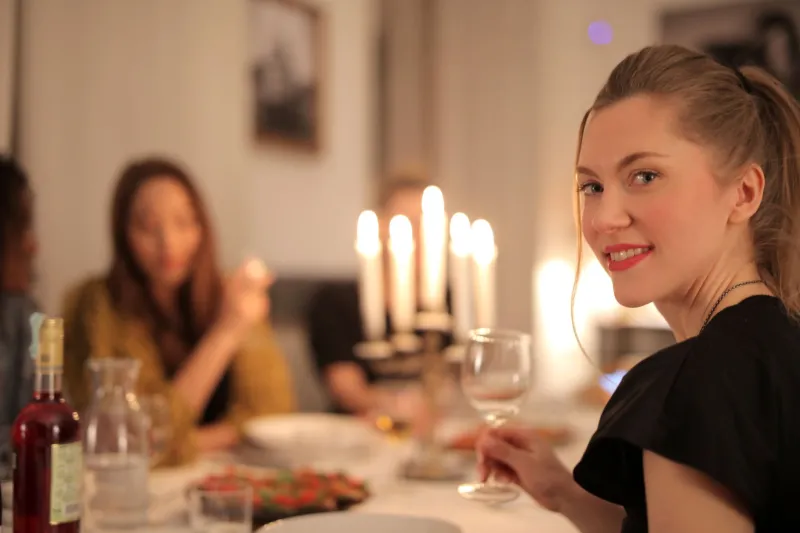
At Ellison Bistro, these choices are neither arbitrary nor decorative. The room is arranged to create what designers sometimes call "sociofugal" and "sociopetal" zones—spaces that gently push people together or allow them graceful distance, depending on the occasion. A couple celebrating quietly at a corner banquette and a group of colleagues unwinding after a long Thursday exist in the same room without competing for its atmosphere. That calibration is an art form, and it is among the first things long-time patrons mention when asked why they keep returning.
"It never feels like they want you to leave," said one guest who has been dining at her neighborhood bistro every Tuesday evening for the better part of three years. "And it never feels like they're ignoring you either. That balance is harder to find than people realize."
The Staff as Social Infrastructure
If the room provides the conditions for belonging, the staff provide its texture. In a bistro that functions as a genuine third place, front-of-house professionals are not simply order-takers or plate-carriers. They are, in a very real sense, the connective tissue of the room.
They remember that the woman at table six takes her coffee without cream but appreciates being offered it anyway—because the offer is the gesture, not the cream. They notice when a regular arrives alone on a night they usually come with someone else, and they read the room carefully before deciding whether to acknowledge it. They introduce the man at the bar who works in architecture to the couple beside him who just bought a house and are quietly panicking about the renovation. These are not accidents. They are the product of a staffing philosophy that values social intelligence as highly as technical skill.
This philosophy requires trust between management and staff—a willingness to hire for warmth and then train for precision, rather than the reverse. It also requires a certain humility on the part of ownership: an acknowledgment that the room does not belong entirely to the business. It belongs, in some meaningful way, to the people who have chosen to make it part of their lives.
"When we started thinking about this place," one bistro owner reflected in a recent conversation, "we kept asking ourselves what we wanted people to feel when they walked in on a Wednesday night with nothing particular to celebrate. That question changed everything about how we hired, how we designed the menu, how we thought about pacing."
The Menu as Common Language
A bistro's menu, when it is working at its highest function, becomes a kind of shared vocabulary for its regulars. Dishes accrue meaning over time—the mushroom risotto that one couple orders every anniversary, the half-bottle of Burgundy that a particular group of friends splits every time they have something difficult to discuss, the dessert that a solo diner treats herself to only when she has genuinely earned it.
This is not sentiment for its own sake. It is the mechanism by which a restaurant earns its place in the emotional geography of a neighborhood. When a dish disappears from the menu without warning, regulars feel something close to grief—not because the food itself was irreplaceable, but because the ritual surrounding it was. The bistros that understand this tend to evolve their menus with care and transparency, explaining seasonal changes, honoring requests, and occasionally bringing something back simply because it is missed.
The menu, in this sense, is a living document of the community that has formed around it.
Why Wednesday Matters More Than Saturday
One reliable measure of whether a bistro has become a genuine third place is the character of its midweek evenings. Saturday nights are relatively easy to fill; they carry their own social momentum. But a Wednesday at seven o'clock reveals something truer about a restaurant's relationship with its neighborhood.
In the bistros that have earned this status, Wednesday evenings are not quieter versions of the weekend. They are something different in kind—more intimate, more habitual, populated by people who are there not because the occasion demands it but because the place does. The retired professor who comes in to read and have the soup. The two colleagues who have made it their standing debrief after a long week of meetings. The young woman who discovered, after a difficult breakup, that sitting at the bar here on a weeknight was the only thing that reliably made her feel less alone.
These are the stories that accumulate invisibly inside a bistro's walls, layering over years into something that begins to resemble history.
What We Are Really Looking For
It would be easy to sentimentalize all of this—to speak of bistros as though they were simply warm and welcoming and leave it at that. But the phenomenon of the third place is more precise than warmth alone. It is about reliability, about the particular comfort of a space that remains itself across seasons and years, that absorbs the changes in your life without losing its own character.
Americans have been searching for this kind of constancy with increasing urgency. The pandemic years stripped away many of the informal gathering places that neighborhoods had taken for granted, and their absence made visible something that had always been true: we do not simply need places to eat. We need places to be—spaces where our presence is known, our preferences remembered, and our company, however quietly, valued.
The bistro, at its best, has always understood this. The table is never just a table. It is the place where the week makes sense, where the conversation left unfinished last Tuesday picks up without explanation, where belonging is not performed but simply, reliably, felt.
That is the effect worth cultivating. And for those who have found it, it is among the most difficult things in the world to give up.