Held Breath: The Bistro as Witness to Life's Most Unfinished Sentences
There is a particular kind of quiet that settles over a table just before everything changes. It is not the comfortable silence of two people who have run out of things to say. It is something denser — charged, almost architectural — the kind of stillness that experienced bistro servers recognize the moment they approach. They slow their pace. They find something to attend to nearby. They understand, without being told, that they are standing at the edge of someone else's precipice.
The American bistro has always occupied a curious social position. It is neither the boisterous informality of a neighborhood diner nor the ceremonial hush of a fine dining institution. It exists in between — intimate enough for confession, public enough to provide a kind of courage that privacy alone cannot always summon. It is, in the most unintentional way, the perfect architecture for the moments that matter most.
The Room That Holds Without Asking
Marcella, a front-of-house manager who has worked the floor of a Chicago bistro for eleven years, describes a particular Friday evening she still thinks about regularly. A couple arrived for their reservation — early thirties, dressed carefully but not formally, the kind of effort that signals occasion without announcing it. They ordered a bottle of wine, barely touched their bread, and spoke in the low, measured tones of people negotiating something significant.
"You learn to read the table without staring," she explains. "The way someone positions their hands. Whether the eye contact is steady or searching. That night, I could tell something large was being decided. I kept my distance, made sure their glasses stayed full without interrupting, and by the time they left — both of them crying quietly but leaving together, holding hands — I understood that whatever had been uncertain when they arrived had been resolved."
She never learned what the conversation was. She did not need to. Her role, as she understood it, was simply to hold the space around them steady.
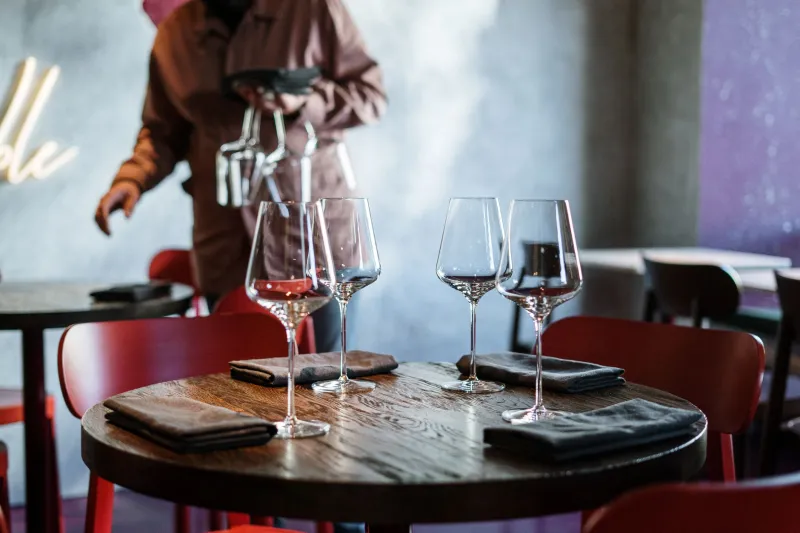
This is the quiet professional art that rarely earns recognition: the management of proximity. Bistro staff navigate a constant tension between attentiveness and intrusion, between presence and invisibility. In the moments that matter most to their guests, the finest among them achieve something close to grace — present enough to provide comfort, distant enough to allow honesty.
The Geography of Vulnerability
Psychologists who study social behavior have long noted that semi-public spaces carry a unique psychological function. The presence of others — not close enough to overhear, but visible enough to remind us of the larger world — can actually lower certain emotional defenses. A couple navigating a difficult conversation at home may circle the same argument indefinitely. The same couple, seated at a corner table with soft lighting and the ambient murmur of other lives nearby, often finds a way through.
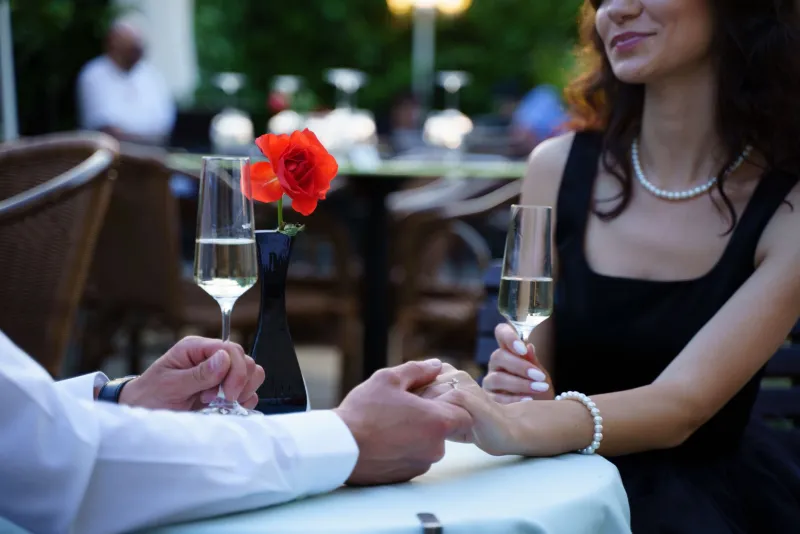
This may explain why so many of life's pivotal exchanges seem to happen in bistros. Proposals, certainly — the bistro has long served as the preferred stage for that particular declaration, offering just enough formality to mark the moment without the intimidating grandeur of a Michelin-starred room. But the bistro also witnesses the harder conversations: the breakup that has been building for months and finally finds its words over untouched entrées; the adult child finally addressing something unspoken with an aging parent; the business partners dissolving what was once a shared dream with the careful language of people trying not to wound each other further.
Daniel, a sommelier who has worked in the same Boston bistro for eight years, recalls a lunch service during which a woman sat alone for nearly two hours, her phone face-down on the table, a glass of Sancerre barely touched. She was, he sensed, preparing herself for something. When her companion finally arrived — another woman, clearly a close friend — the first woman spoke almost immediately, her voice low but steady. By the time the check was requested, something had visibly shifted. The tension had not disappeared, but it had been named.
"I think sometimes people need a neutral ground," Daniel reflects. "Home carries too much history. A bar is too loud. But a bistro — there's something about the light, the pace of it — it gives people permission to say the thing they've been carrying."
Learning to Hold Without Grasping
The training that prepares bistro professionals for these moments is rarely explicit. No manual covers the proper distance to maintain when a guest is mid-proposal, or the precise moment to offer a discreet tissue alongside the dessert course. This knowledge is absorbed gradually, through observation and instinct, passed from senior staff to newer colleagues in the form of small, telling gestures.
"You watch the experienced ones," says Renata, a server at a Nashville bistro who has worked the floor for six years. "They have this way of moving around a difficult table — they're there, but they're not there. It takes time to learn. Early on, I interrupted a conversation at exactly the wrong moment. I could feel it. The couple recovered, but I carried that for a long time. Now I read the table before I read the order."
What emerges from these accounts is a portrait of a profession that has quietly assumed a responsibility far beyond its formal description. Bistro staff do not merely serve food and facilitate reservations. At their most attuned, they become the careful stewards of the room's emotional weather — adjusting the atmosphere around a difficult table the way a skilled lighting technician adjusts a stage, ensuring that the people at the center of the scene have exactly what they need to find their way through.
After the Table Is Cleared
The guests depart. The table is reset — new linen, fresh candles, the physical evidence of the previous occupants erased with practiced efficiency. But the bistro professionals who witnessed what passed there carry something forward. Not the specific words, which they rarely hear in full, but the shape of the moment. The weight of it.
"You see a lot of life in this work," Marcella says, simply. "People think they're invisible at the table. In a way, they are — we're not watching them the way they might fear. But we're aware of them. We're holding the room around them. And sometimes, at the end of a shift, you think about a particular table and you hope it went the way they needed it to go."
This is the bistro at its most essential: not a backdrop, but a participant. A space that absorbs the full spectrum of human negotiation and offers, in return, the particular gift of being witnessed without being exposed. Where every table, as the saying goes, has a story — and the people who tend those tables have learned, above all else, how to listen.