Written in Linen: The Bistro as America's Quiet Confessional
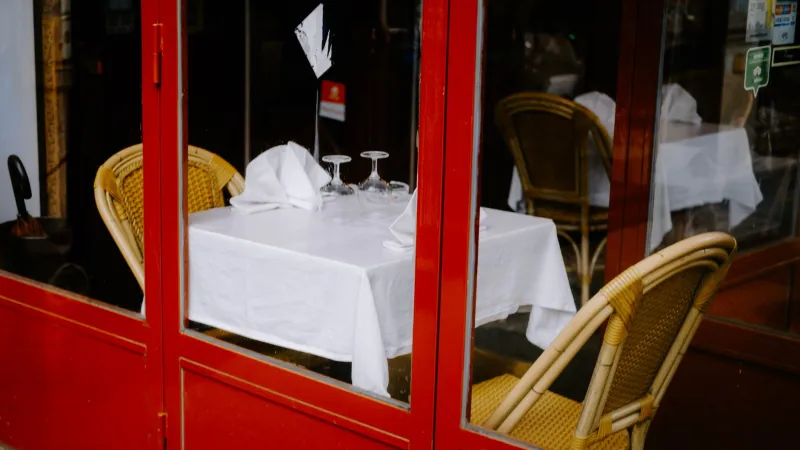
There is a particular kind of silence that settles over a bistro table mid-afternoon, when the lunch crowd has thinned and the dinner service has not yet begun. The room breathes differently in these in-between hours. Light moves slowly across white tablecloths. A server refills a water glass without being asked. And somewhere in a corner booth, a diner uncaps a pen and writes something on the edge of a folded napkin—not a grocery list, not a phone number, but something altogether more private.
This is not an unusual scene. It happens in bistros from Portland, Maine, to Portland, Oregon, with a frequency that the hospitality industry has quietly acknowledged but rarely discussed aloud. The bistro, it turns out, has become one of America's most unexpected confidants.
The Architecture of Permission
Psychologists who study environment and behavior have long understood that physical spaces carry implicit social contracts. A library asks for quiet. A stadium asks for noise. A bistro, with its warm lighting, measured distance between tables, and the ambient murmur of other conversations, creates something more nuanced: a space that feels simultaneously public and private.
This paradox is precisely what makes the bistro so conducive to introspection. A diner alone at a table in a well-appointed restaurant is, in the eyes of strangers, simply dining. There is no explanation required, no performance demanded. The anonymity of a public space combines with the intimacy of a well-tended room to produce an environment in which people feel both seen and invisible—a combination that, for many, is the precondition for honest thought.
The napkin becomes an extension of this permission. Unlike a phone screen, it carries no notifications. Unlike a journal left on a nightstand, it exists outside the architecture of daily life. Writing on a napkin is, in a certain sense, writing off the record—which may be exactly why so many people do it at moments of genuine consequence.
What Gets Written Down
The stories shared among bistro staff, passed along in the careful, respectful language of people who understand discretion, suggest that what gets committed to linen and paper in these rooms runs the full range of human experience.
There are the practical decisions: the job offers weighed against competing loyalties, the real estate figures calculated and recalculated until the numbers either make sense or don't. There are the emotional reckonings: the first time someone writes down, in plain language, that a relationship is over, or the afternoon a person finally drafts the words they have been meaning to say to a parent for twenty years. And there are the creative breakthroughs—the song lyric that arrived between the appetizer and the entrée, the business name that finally felt right, the opening sentence of something that would eventually become significant.
Menus, too, serve this purpose. The white space in a menu's margins has absorbed more than wine notes and dish preferences. It has held phone numbers that changed lives, addresses of places people decided they needed to go, and occasionally, in the smallest possible handwriting, the kind of confessions that require the cover of a laminated page to feel safe.
The Ethics of Witnessing
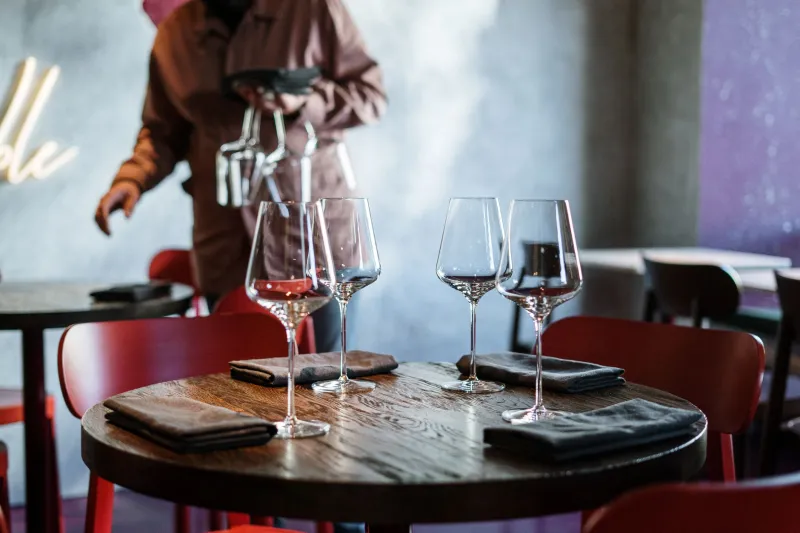
For the professionals who work these rooms, this dimension of bistro life presents a quiet but genuine ethical complexity. A well-trained server develops a kind of peripheral awareness—attuned to the table's needs without intruding upon its atmosphere. But what happens when what a server observes moves beyond the professional and into the deeply personal?
The answer, in practice, is a form of disciplined grace. Experienced bistro staff describe an unspoken code: you see what you need to see to do your job, and you release the rest. A diner with tears on their face gets a fresh glass of water and a moment of unhurried quiet, not a solicitation for conversation. A couple sitting in silence—the kind of silence that means something—gets space, not cheerful interruption.
This restraint is itself a form of hospitality, arguably the most sophisticated form. It requires reading not just what a table needs, but what it needs to be left alone to find. The best bistro professionals understand that their role is sometimes to hold the perimeter of a moment, not to enter it.
There are, of course, harder situations. The server who notices that a diner has been writing on the same napkin for forty minutes and has visibly been crying. The host who watches a guest fold a note, tuck it into a pocket, and sit for a long time afterward looking at nothing. These moments ask more of the staff, and the response, in a well-run bistro, is almost always the same: presence without pressure, attention without intrusion.
What the Room Holds
There is a reason that people do not typically write their most important thoughts in airport terminals or shopping centers, though both offer a degree of anonymity. The bistro offers something those spaces do not: the suggestion that what happens here matters. The care taken with a plate, the attention given to a glass, the deliberate composition of a room—all of it communicates that this is a place where things are taken seriously. That message, absorbed without conscious thought, may be precisely what gives people permission to take their own inner lives seriously in turn.
At Ellison Bistro, we have always believed that a table is more than a surface for plates and glasses. It is a place where people arrive as they are and, sometimes, leave as something slightly different. The meal is the occasion. The room is the container. But the real event—the conversation held or the decision made or the feeling finally named—belongs entirely to the person sitting there.
The Napkin Left Behind
Most diners take their napkin notes with them. Some do not. What gets left behind on a bistro table at the end of a meal—a crumpled linen square, a menu with pencil marks in the margins—represents a kind of inadvertent archive of American interior life. Bistro staff who have worked these rooms for years speak about these artifacts with a particular kind of reverence. They are not curious about the content. They are simply aware, in the way that people who work close to human experience tend to be, that something real happened here.
The bistro does not advertise this function. It does not need to. People find their way to these rooms when they need them, drawn by something they may not be able to name but recognize on arrival: a space that is formal enough to feel significant and intimate enough to feel safe. A place where the table holds whatever you bring to it, and where the room keeps its counsel long after you have gone.