The Reservation Book as Biography: How Your Bistro Knows You Better Than Your Own Diary
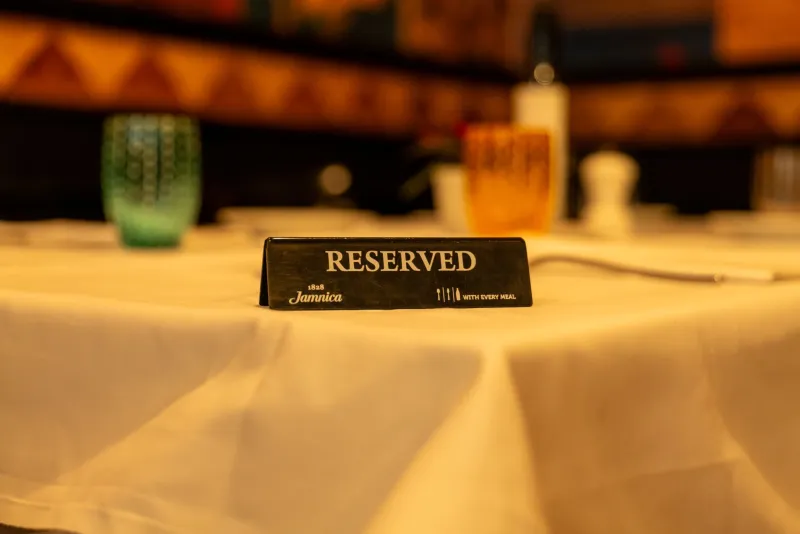
Somewhere between the first course and the final pour, a bistro begins to remember you. Not in any dramatic or deliberate fashion, but in the slow, accumulated way that intimacy works — one visit layered upon another, each evening adding a sentence to a story that neither party formally agreed to write. Over time, the reservation book becomes something far more complex than a scheduling tool. It becomes, in many ways, a more faithful chronicle of your life than the one you keep yourself.
At Ellison Bistro, where every table carries its own narrative weight, this reality is taken seriously. The question of what a restaurant knows about its guests — and what it does with that knowledge — sits at the intersection of hospitality, ethics, and something approaching the sacred.
What the Notes Actually Say
Ask any experienced host or floor manager what a reservation file looks like for a longtime regular, and the answer will likely surprise you. These are not merely columns of dates and party sizes. Alongside the standard dietary restrictions and seating preferences, the notes accumulate texture: a guest who always requests the corner booth when she brings her mother; a couple who celebrated their first anniversary with a bottle of the 2019 Willamette Valley Pinot and returned, three years later, to mark their third with the same selection; a man who dines alone every Tuesday and prefers not to be engaged in conversation beyond the essential.
Margarette Holloway, a front-of-house manager with more than eighteen years in the industry across Chicago and the Mid-Atlantic, describes it plainly. "You start to notice that someone's guest changes," she says. "Or that they stopped coming for four months and came back looking different. You don't write that down, exactly. But you hold it. And when they return, you greet them accordingly."
This is the institutional memory that distinguishes a great bistro from a merely competent one. It is not surveillance. It is attention — sustained, careful, and fundamentally oriented toward the guest's comfort.
The Milestones You Forgot You Marked
There is a particular category of human experience that tends to find its way to a restaurant table: the moments too large for the living room and too personal for the conference hall. The job offer accepted over a shared plate of charcuterie. The diagnosis delivered gently across a linen-draped surface. The reconciliation attempted over a bottle of something honest and red. Bistros, by virtue of their scale and atmosphere, absorb these events in ways that larger dining establishments simply cannot.
What is less often acknowledged is that many guests have no personal record of these moments at all. No journal entry, no photograph, no timestamp. The bistro, however, may have all three in proxy form — a reservation note that reads anniversary, same menu as last year, or a server's handoff briefing that mentions they lost someone recently, be gentle tonight.
David Rao, a reservations director who has worked in fine dining in New York and Washington, D.C., recalls a guest who came in to celebrate a birthday every year for eleven consecutive years. "When she called to book the twelfth, she mentioned it would be different — her husband had passed. We pulled the file. We knew the cake they always ordered, the wine, the table. We could either pretend we didn't know, or we could acknowledge it with care." They chose the latter. The guest, he says, wept quietly when the familiar dessert arrived, unrequested, at the end of the meal. "She told us later it was the first time she'd felt seen since the funeral."
The Ethics of Accumulated Knowing
This intimacy carries weight. The same attentiveness that allows a bistro to honor a guest's grief can, if handled carelessly, feel intrusive or presumptuous. The line between warmth and overreach is real, and the best hospitality professionals are acutely aware of it.
The general principle that guides thoughtful establishments is one of service rather than familiarity. The information gathered exists to improve the guest experience — not to demonstrate how much the restaurant knows, but to quietly remove friction and add comfort in ways the guest may not even consciously register. A table ready before you've finished removing your coat. A drink that arrives without being ordered. A server who does not ask whether you'd like to hear the specials because the notes say you never do.
"There's a difference between being known and being watched," Holloway observes. "We're not cataloguing people. We're trying to make them feel at home. The notes are just memory aids for doing that job well."
The ethical dimension extends to what is never recorded. Experienced professionals develop an instinct for the information that should not be written down — the overheard argument, the tearful phone call taken in the corridor, the guest who arrived with someone other than their usual companion. These observations are held, if at all, in the private conscience of the individual server. They do not enter the file.
When the Archive Becomes a Gift
There are moments when a bistro's accumulated knowledge transforms into something unexpectedly moving. A guest who has dined at the same establishment for two decades may find, upon some significant occasion, that the restaurant remembers details they themselves had forgotten. The vintage of the wine poured at their rehearsal dinner. The dish their late father always ordered. The table where they sat the night they decided to leave a job they had held for years.
These are not trivial details. They are the coordinates of a life, and the fact that someone else has been quietly holding them — not for any commercial purpose, but simply because they were paying attention — can feel like an unexpected form of grace.
At Ellison Bistro, this is the animating philosophy behind every reservation note, every server briefing, every carefully considered seating arrangement. The table is not merely a surface for plates and glasses. It is the site of a relationship — between the guest and the meal, between the diner and the room, and between the individual and the institution that has, over many years and many evenings, come to know them with a fidelity that is both humble and profound.
A Quiet Accountability
Perhaps the most striking implication of all this is not what bistros know, but what that knowledge asks of them. To hold the biographical details of another person's life — even in the abbreviated, service-oriented form of a reservation note — is to accept a quiet accountability. It is to say, implicitly, we see you, and we will treat what we see with care.
In an era when data collection is ubiquitous and frequently impersonal, the bistro's version of record-keeping stands apart. It is human in origin, human in purpose, and governed not by algorithm but by the older and more demanding standard of professional grace.
Your diary may have gaps. Your memory will certainly have them. But somewhere, in the reservation system of a bistro that has come to know you well, the record is more complete than you might expect — and it is being kept, quietly and faithfully, in your honor.