The Clock at the Door: How Your Arrival Time Shapes Everything That Follows
There is a particular kind of guest who arrives seven minutes before the reservation. They are not early in any anxious sense. They simply understand, perhaps instinctively, that a restaurant is a living system — one that breathes in shifts, pulses with heat and intention, and responds to the precise moment a guest chooses to enter it. That seven-minute margin is not mere punctuality. It is a form of fluency.
At Ellison Bistro, as at most serious American dining rooms, the relationship between guest and kitchen is governed by an invisible contract. And timing, more than almost any other variable, determines whether that contract is honored gracefully or strained at its seams.
The Kitchen Reads the Clock Long Before You Do
Behind the swing door, time is not experienced the way it is in a dining room. There are no soft playlists or candlelit centerpieces in a working kitchen. There is mise en place, fire, and the relentless forward pressure of service. Every reservation on the books represents a commitment — a promise that a specific sequence of preparations will culminate in something beautiful at precisely the right moment.
When a guest arrives early, that sequence is compressed. A table must be turned faster, a server must pivot mid-task, and a kitchen that was pacing itself toward a 7:30 delivery must suddenly recalibrate. The dish that was meant to rest for three minutes before plating does not get those three minutes. The sauce that wanted another reduction is poured before its peak. These are small sacrifices, invisible to the guest, but felt deeply by the professionals who made them.
Conversely, a guest who arrives twenty minutes late introduces a different kind of disruption — one of suspension. The kitchen has built toward a moment that does not arrive. Proteins held too long at temperature lose their integrity. The carefully composed amuse-bouche that was meant to greet a guest at the table sits, waiting, gradually surrendering its intended character.
None of this is meant to scold. It is simply to illuminate the hidden architecture of a meal — the fact that a dining experience is not a static object retrieved from a shelf, but a performance timed to the second.
What the Host Holds in Their Head
The host stand at a well-run bistro is something close to an air traffic control tower. On any given Friday evening, a skilled host is managing not just who sits where, but when each table will turn, which sections need relief, and how the energy of the room can be sustained across a three-hour service window.
Arrival timing is one of their most critical variables. A table of four who arrives together, on time, is a clean unit — easy to seat, easy to pace, easy to serve. A party where three guests arrive and one is perpetually twenty minutes behind introduces a cascade of small decisions: Do we seat the partial party? Do we hold the table? Do we offer the bar? Each answer has downstream consequences for the tables around them, for the server's section, and for the kitchen's rhythm.
Regulars at any serious bistro tend to understand this intuitively. They arrive with intention. They know that the host's warm greeting is not merely social — it is the beginning of a collaboration. And they honor it accordingly.
The Social Contract of the Fashionably Late
American dining culture has long held a complicated relationship with the concept of fashionable lateness. In certain social circles, arriving precisely on time to a dinner reservation carries an almost uncouth punctuality — as though eagerness were something to be managed. This perception, while understandable in a social context, does not translate well to the professional dining room.
The bistro is not a dinner party. The kitchen is not a home oven holding a casserole at low heat. It is a precision operation staffed by professionals whose craft depends on timing as much as technique. To arrive late without notice is, in a quiet way, to ask those professionals to absorb the cost of a social affectation.
This is not a moral judgment. It is an observation about consequence. The guest who arrives late may never taste the difference in their meal. But the chef who plated that dish, the server who carried it, and the host who held that table — they know.
The Early Arrival and Its Unexpected Gifts
There is something to be said, however, for the guest who arrives genuinely early — not the nervous seven-minute buffer, but the full fifteen minutes before the room fills. This guest occupies a rare and often undervalued position in the evening's unfolding.
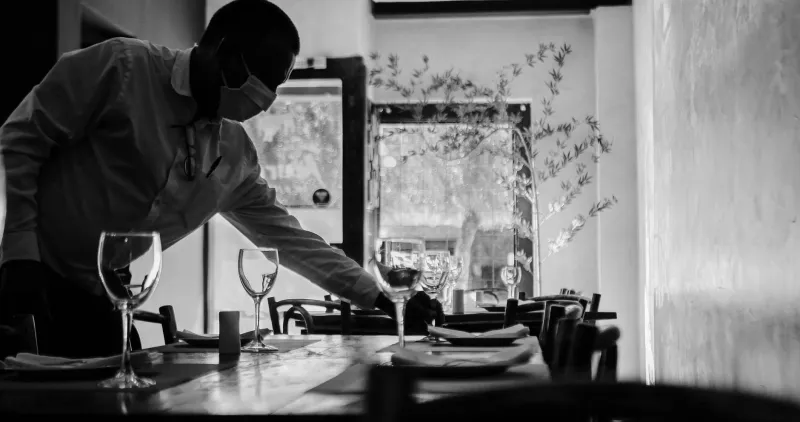
They see the dining room before it becomes itself. The servers are still in the quiet pre-service ritual of folding napkins and tasting the evening's specials. The bar is unhurried. The host has a moment to speak without the pressure of a queue behind them. The early guest, if they are attentive, witnesses the backstage of hospitality — and that witnessing, that intimacy with the room's preparation, tends to produce a particular kind of gratitude.
Some of the most memorable conversations at Ellison Bistro's tables have begun in this early stillness. A guest asks the server what they are most excited about on tonight's menu. The server, not yet in the full sprint of service, answers honestly and at length. A dish is chosen not from obligation but from genuine enthusiasm. The meal that follows carries that enthusiasm forward.
Timing as a Form of Respect
Ultimately, the question of when to arrive at a bistro is a question about relationship. Every dining room worth its reputation is built on a quiet reciprocity: the kitchen gives its full attention and craft, and the guest honors that gift by showing up prepared to receive it.
Arriving on time — or close to it — is one of the simplest and most effective ways a diner can signal that they understand what a restaurant actually is. Not a service transaction. Not a stage set assembled for their convenience. But a living, collaborative experience that requires both parties to be present at the same moment.
The bistro's clock does not stop for fashionable delay, nor does it rush for the impatient early arrival. It moves at the pace of care — and the guest who learns to match that pace will find, almost without exception, that the evening meets them exactly where they hoped it would.
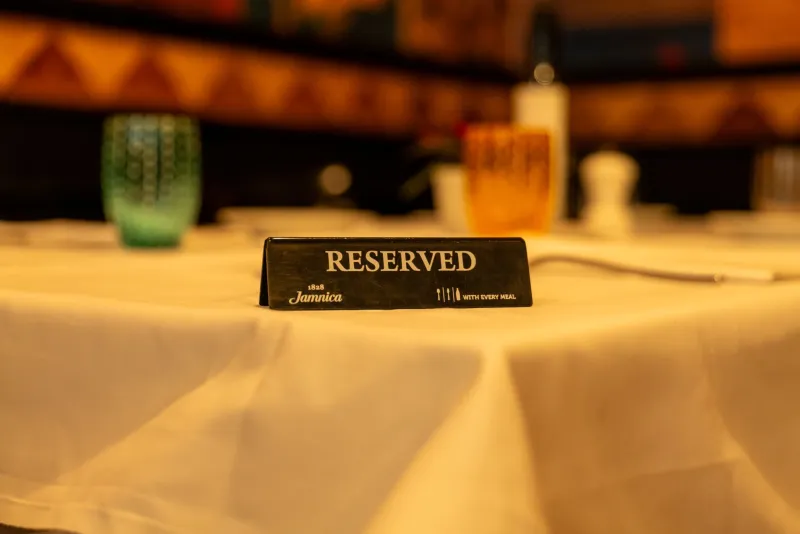
There is a table waiting. The kitchen is ready. The only remaining variable is you.