The Gravity of a Good Room: What Makes Certain Bistros Impossible to Leave

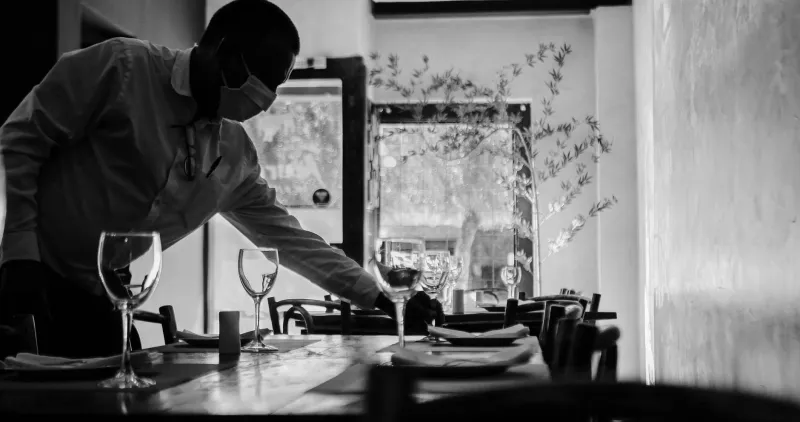
Photo: intimate candlelit bistro dining room guests lingering evening, via static.wixstatic.com
There is a moment familiar to anyone who has dined somewhere genuinely extraordinary. The plates have been cleared. The final pour has been made. The conversation has moved through its natural arc and arrived somewhere quieter, more settled. And yet no one reaches for a coat. No one flags the server for the check. The table holds its occupants the way a warm room holds its heat—not through force, but through a kind of atmospheric insistence.
This phenomenon has no formal name in the hospitality industry, though those who work within it recognize it immediately. Call it the gravity of a good room. At Ellison Bistro, it is something we have observed night after night, table after table: the way certain guests arrive with an agenda and leave having forgotten what it was.
Time, Altered
Diners who frequent beloved bistros often describe a peculiar relationship with time once they cross the threshold. The hour that passes inside feels, upon reflection, like twenty minutes. The two hours feel like one. Psychologists who study environmental perception refer to this as temporal displacement—a condition in which sensory immersion disrupts the brain's ordinary timekeeping mechanisms.
The factors that induce it are not mysterious, though they are difficult to engineer deliberately. Lighting plays an essential role. When a room is lit at the precise temperature that flatters both the food and the faces around the table, the eye stops searching and begins resting. Sound calibration matters equally. A dining room that absorbs conversation rather than broadcasting it creates a kind of acoustic privacy, a bubble within which the outside world loses its urgency. Scent, often underestimated, completes the architecture. The slow accumulation of roasted aromatics, fresh herbs, and aged wood forms an olfactory signature that the brain associates, over time, with comfort and arrival.
Together, these elements do not merely create atmosphere. They alter the diner's physiological state in measurable ways—lowering cortisol, slowing respiration, softening the grip of whatever the day required.
The Role of Recognition
Beyond the sensory, there is the deeply human dimension of being known. Long-time patrons of intimate bistros frequently cite recognition as the single most powerful reason they return—and the most powerful reason they linger. Not the performative recognition of a host reciting a name from a reservation sheet, but the quieter, more substantive kind: a server who remembers that you take your coffee before dessert, not after. A bartender who pours your preferred aperitif without being asked. A kitchen that sends out a small adjustment to a dish because the chef recalls your preference from a visit six months prior.
This quality of attention communicates something profound to the diner: you are not interchangeable here. In a culture that has grown increasingly efficient at making people feel like variables in a transaction, the bistro that treats its guests as individuals with histories and preferences offers something genuinely rare. It offers the experience of mattering.
The reluctance to leave such a place is, in part, the reluctance to relinquish that feeling. The world outside the door is largely indifferent. The room inside is not.
Sanctuary, Defined by Contrast
It is worth considering what guests are leaving behind when they enter a dining room that holds them. The American workday has grown longer and more porous, its boundaries dissolved by devices that insist on constant availability. Commutes are stressful. Domestic life, for all its rewards, carries its own weight of logistics and obligation. The bistro, entered deliberately and at a chosen hour, represents a voluntary departure from all of it.
This contrast is not incidental to the dining experience—it is constitutive of it. The meal tastes better because it was chosen. The conversation deepens because it is uninterrupted. The wine settles differently because no one is asking you to do anything other than be present at the table.
Regular guests of Ellison Bistro have described the experience in terms that consistently return to this theme of contrast. One patron who has dined here on the first Friday of every month for several years put it plainly: "I don't come here to eat, exactly. I come here to remember what it feels like to not be in a hurry." Another described the bistro as the only place in her week where she feels neither productive nor unproductive—simply present.
This is not a small gift. In an era defined by the relentless pressure to optimize time, the room that makes time feel irrelevant is offering something close to radical.
The Architecture of Reluctance
What separates a bistro that holds its guests from one that merely feeds them is, ultimately, intentionality. Every element of a dining room that creates the gravity of a good room was decided by someone. The warmth of the light was chosen. The density of the tables was calculated. The training of the staff was shaped by a particular philosophy of hospitality—one that prioritizes the guest's experience of ease over the operation's interest in efficiency.
This is not easy to sustain. The pressures of a restaurant's economics push constantly toward speed, toward turnover, toward the optimization of the dining room as a revenue-generating space. The bistros that resist this pressure, that protect the conditions under which guests feel held rather than processed, do so at real cost and with genuine conviction.
The reward, however, is measurable in its own way. Guests who feel the gravity of a good room return. They bring others. They speak of the place in terms that belong to a different register than ordinary recommendation—not you should try it but you have to go. The distinction is significant. One is a suggestion. The other is an invitation to experience something that has become, for the speaker, necessary.
What Remains When the Evening Ends
Eventually, of course, every table empties. The coats are retrieved. The door opens onto whatever the evening has become outside. But the diner who has spent time in a room that held them carries something away that is difficult to name and impossible to manufacture artificially.
It is, perhaps, the memory of what it felt like to be somewhere entirely on purpose. To have been recognized. To have let time go slack. To have sat at a table that, for the duration of an evening, was the only place in the world that mattered.
At Ellison Bistro, we believe that every table has a story. What we have come to understand, over years of watching guests linger and return, is that the most enduring stories are not the ones told at the table—they are the ones guests carry with them when they finally, reluctantly, leave.